

Shorten the immune system: reduce stress
Unfortunately, this is causing me stress. It makes me angry and helpless that politicians and the press are almost exclusively reporting horror stories about infectious diseases and flu epidemics - especially coronavirus: Next wave, new mutation, deaths...
It's frustrating for me that almost nobody is bringing the good news: We can strengthen our immune system with simple means and thus reduce the likelihood of falling ill.
Even the former health minister Mr Spahn, for example, took zinc and vitamin D during his own Covid 19 illness to strengthen his immune system.
Unfortunately, he didn't come up with the nice idea of having experts draw up recommendations for the population. I think that's a real shame, because even educated people tell me: "I thought there was nothing I could do about the virus - except get vaccinated!"
Too bad" is still too mild. People die every year who don't necessarily have to die already... that makes me almost desperate sometimes.
Anger is really bad for the immune system. Two minutes of anger brings the immune system down for several hours - which is of course the last thing you need - a weakened immune system.
Any kind of unpleasant emotion (fear, pressure, shame, anger) weakens the immune system.
So what can you do?
Reduce stress
Short-term stress activates the immune system. The brain usually reacts to acute stress by causing the adrenal glands to release more of the stress hormone cortisol.
The stress hormone initially alerts the non-specific immune defence, which also includes the natural killer cells. They form the body's first line of defence and render bacteria, viruses and fungi harmless.
Chronic stress on the other hand, has a different effect: The cortisol level in the blood is permanently elevated. The stress hormone binds to receptors located on the surface of certain white blood cells. As a result, the cells release less interleukin-1-beta.
Interleukin-1-beta stimulates the immune cells to multiply and also increases the activity of natural killer cells and promotes the formation of antibodies that specialise in certain pathogens. If the level of interleukin-1-beta falls, the effectiveness of the immune system also decreases.
In addition, chronic stress results in the production of fewer T lymphocytes, which are extremely important for the immune defence.
Just a few minutes of stress caused by excessive physical exertion, anger or frustration increase the inflammation levels in the body and can make the immune system more vulnerable.
People are on high alert and release the stress hormones adrenaline and noradrenaline. Vessels in the muscles are dilated to improve blood circulation. This causes the small vessels in the skin and kidneys to constrict in order to increase the volume of blood inside the body.
The body is ready with every fibre to remove the obstacle and fight the enemy. Everything that is not necessary for the fight is shut down accordingly: the specific immune system, digestion, potency and fertility and clear thinking.
Reduce or avoid stress
The best stress is the stress you don't have. Even if there is "good" stress, challenges that spur us on, in most cases stress is a burden and negative.
It can be helpful to first get an overview of the stress by listing the various stress factors individually. During a particularly stressful phase of my life, more than 40 different individual aspects contributed to the overall feeling of being overwhelmed. No wonder I felt stressed.
You can deal with the different sources of stress in different ways
- Physical stress: Avoid or reduce physical overload and ensure balance, e.g. don't just work sitting down, but walking or standing. Loosen muscles through exercise. Make sure you relax sufficiently, especially after strenuous days.
If physical stress is chronic - for example due to an injury or illness, vitamin B12 can help to mitigate the negative effects on the immune system.
Tip: The vagus nerve is the nerve that controls the relaxation system in the body. You can activate it by gently tapping your sternum.
- Situational stress: A certain situation is stressful or negative - for example, financial challenges or problems at work or in your personal environment can take a lot of energy.
This is where good thinking - perhaps with the help of a coach - can help you find practical solutions.
Tip: Sometimes even small changes can bring great relief, for example if you tidy up your desk or a room in your home or get a few things you've been putting off for a long time done straight away.
- Emotional stress: Anger, resentment, shame, frustration, helplessness, fear - all these emotions weaken the immune system. People often get caught up in these emotions and can no longer get out on their own.
Here you can look for helpful dialogue partners in your own environment or professional coaches who can help you untangle knots and find clarity. As a coach, I would be happy to help you reduce stress and find more serenity.
What I do:
- Breaks: I try to incorporate several short and one long break into my daily routine and spend 30 minutes outside at lunchtime to calm down and reduce stress.
- Solutions: When I'm annoyed about something, I look for solutions.
- In the evening: I review the day and try to let go of stressful things.
- Mindfulness: I pay attention when I tense my shoulders or feel tension in my stomach. Then I try to get in touch with my soul.
What you can do s
- Analyse sources of stress: What things regularly stress you out? What can you do to change this?
- Take breaks: Pause every now and then for a moment or longer and feel: How am I feeling right now?
- Relax: Let your body and soul come to rest. I find it very relaxing to look at animals. Live, for example, birds by the water or online. I love the live Webcam of wild animals in Africa

Tip: The Quadro training booklet Reduce stress shows you many practical ways in which you can reduce stress and prevent new stress. Also as Ebook available.
To the series Strengthening the immune system
Many people are tired of winter. Their health and emotions suffer. As Coach I know that it is harmful when people feel they can do nothing themselves and are at the mercy of the next wave of explanations.
But it is not the case that we are helplessly at the mercy of viruses. There are
- Protection through distance: By keeping our distance, we try to prevent the virus from getting to us
- Protection through the immune system: A strong immune system helps to fight the virus effectively.
There is little talk in the press and politics about how to strengthen your immune system. That's why I'm presenting tips in this series that anyone and everyone can do.
One thing is clear: none of these tips alone will be able to fight the virus completely. But they could hopefully help you and your immune defences to become stronger, perhaps 1%. These could be the crucial 1% that decide whether or not you catch Covid 19 or another virus. And whether you then infect others or not.
If many of us improve our defences by 1% or 5% or 10%, this could lead to an improvement in the incidence of infection. That is my hope.
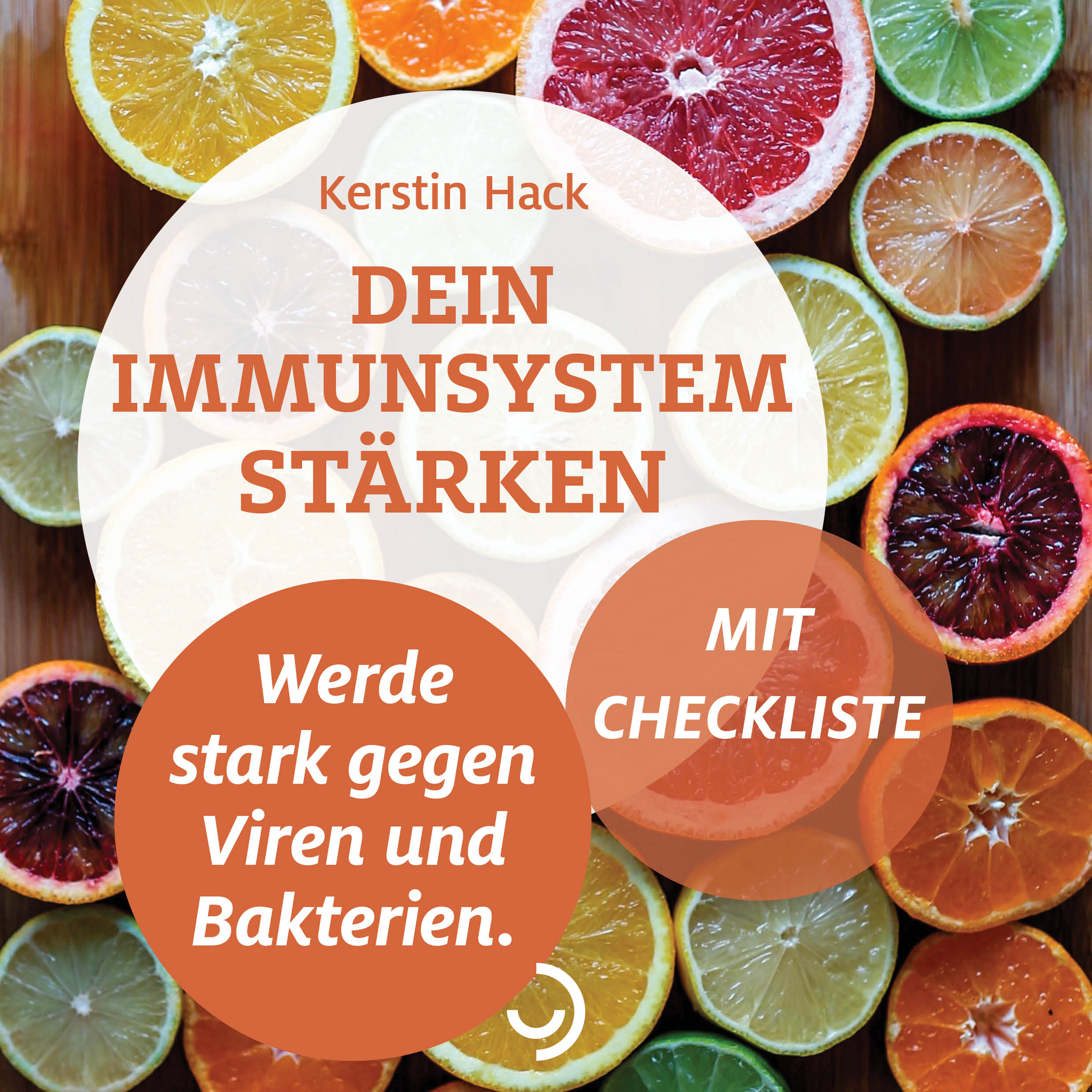
You can find a collection of tips for strengthening the immune system in my free e-book Strengthen the immune system.


