

Ship - January and February
 JANUARY
First of all, things turn out differently – and secondly, not quite as you’d expect… that certainly applies to the work on the ship in January.
What my helpers and I managed to achieve in January:
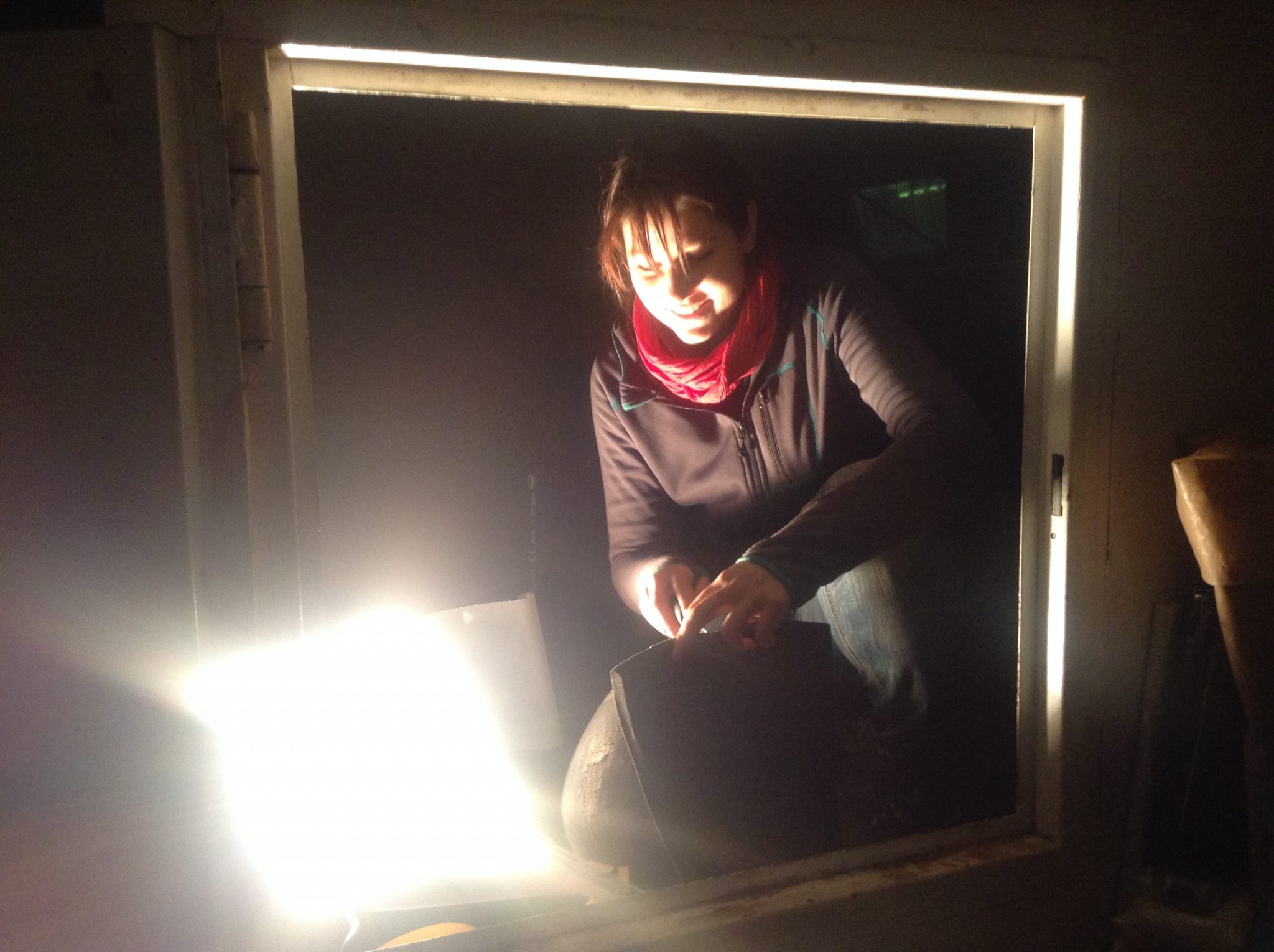
- The ship is even more isolated. Apart from the second layer in the engine room and wheelhouse, the ship is now really well wrapped up! Miriam, who did most of the insulation work, is heading back to southern Germany tomorrow ;-((( – she was even given a farewell certificate today (Kaiflex is the name of the material we used for the insulation).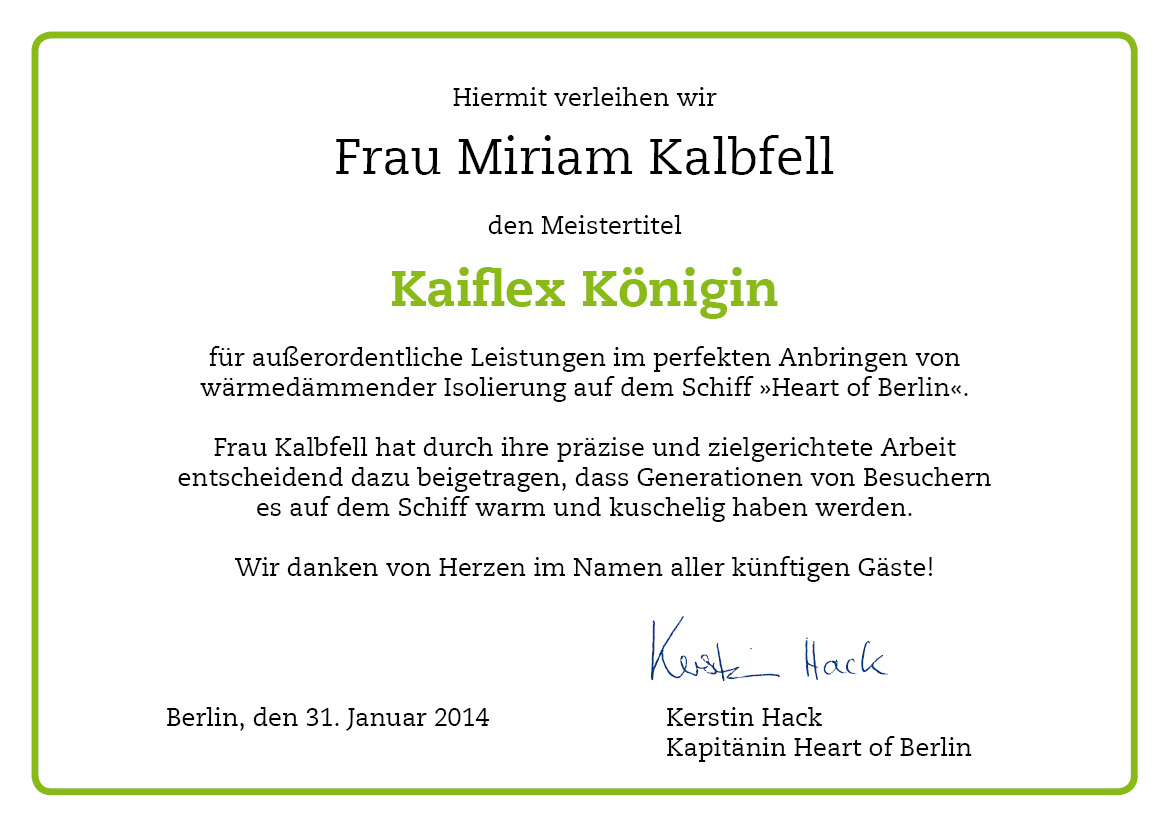
- The seminar room has been further expanded and is getting closer to fulfilling its purpose.
- Rust was removed from an area of approximately 15 square metres below deck and to treat the surface with ship's floor oil. It was mainly my cousin Gerald who did that.
- The surfaces, once derusted and treated with a preservative, were coated with primer. We were really unlucky here. Primers (essentially the base coat) are available as single-component paints, which can be used as they are. And as two-component paints, to which a second component – usually a hardener – must be added before use. With single-component paints, the label simply says „Primer“. With two-component primers, it says „Component A“ or „Component B“. There was nothing on our label, so we happily coated the 15 square metres with the primer, which then didn’t dry for days… which held up all the planned work (insulation, woodwork). After 4 days, we checked the paint bucket again – and on the fourth look realised that the paper layer of the label, which most likely said „Component A“, had torn off superficially… just the top layer bearing the text….You could only tell that the label was damaged in that spot if you looked very closely in very bright light... that was really bad luck...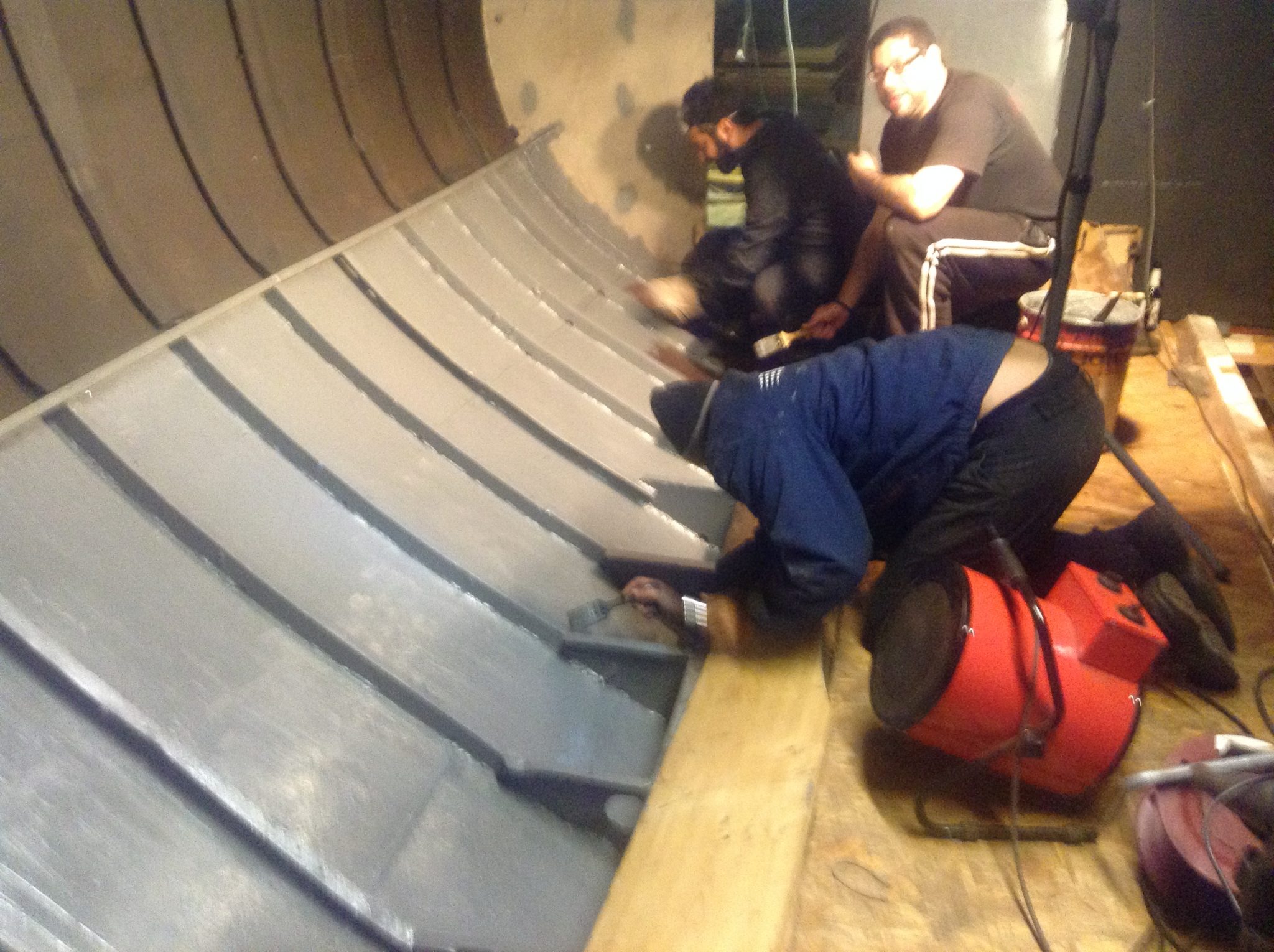
– Brought the monster compressor up from the „basement“ onto the deck… and moved the heavy heater out of the way. And loads of other stuff as well.
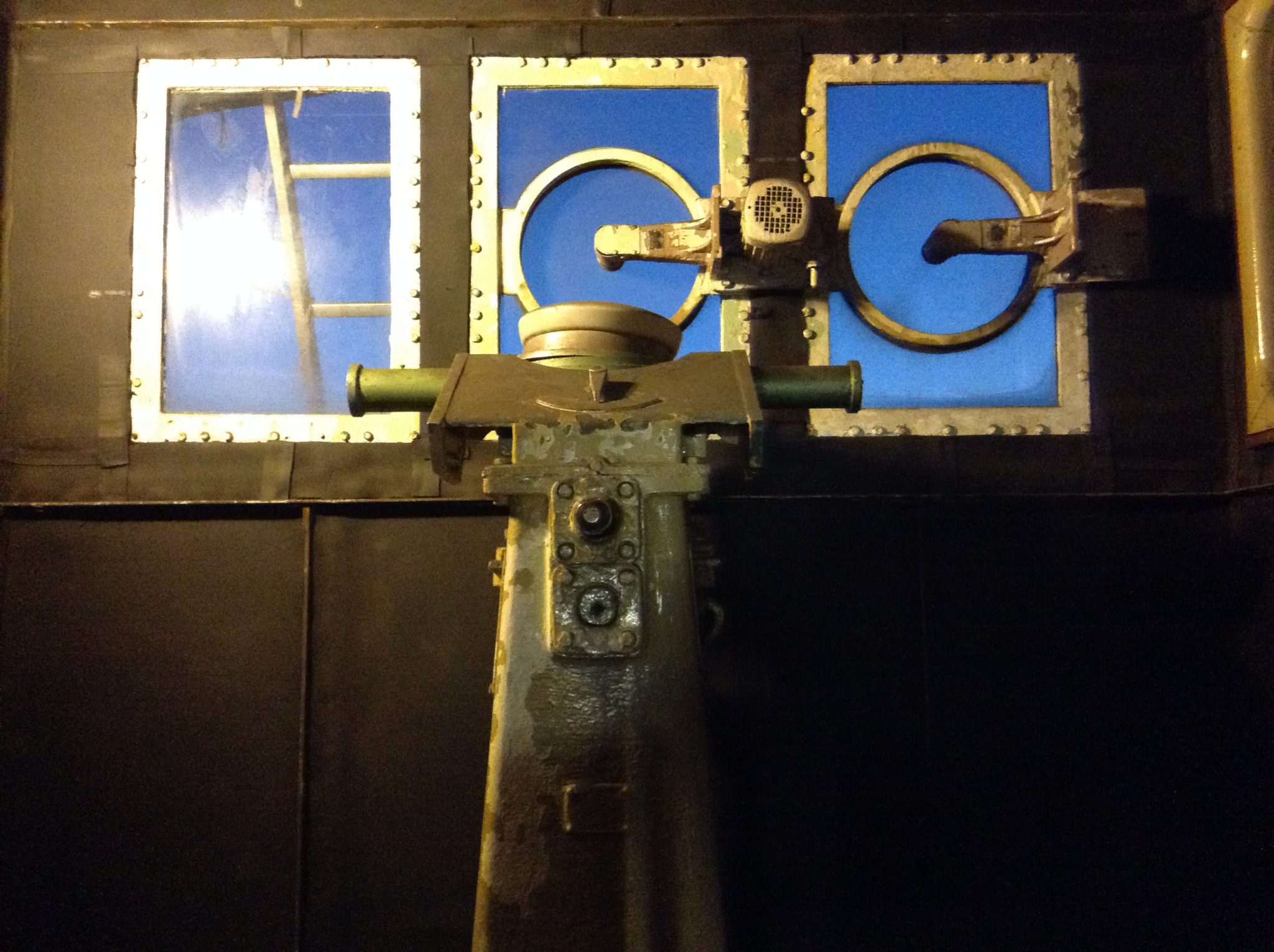
– Cleared out the wheelhouse, removed the old wall panelling, welded the holes in the floor, and insulated the whole thing. That wasn’t on the agenda at all… but as we couldn’t carry on working below deck because of the problems with the primer, we decided to get on with it. There were three of us from Portugal who had come to Berlin specifically for a week’s work.
Financially, January went relatively well. I sold a lot of books through the publisher and also managed to offload some of my second-hand books. I also rented out my bedroom to a paying guest from Berlin for five days, and on top of that I received a whole host of gifts, big and small, for the ship. Some people transfer me 10, 15 or 30 euros every month… that’s enough for a paint pot or two, and so on. The coolest gift was from a granny in England who asked her granddaughter to send me money via PayPal because she can’t do it herself… I’m sooooo grateful to everyone who helps me in one way or another…
By the way, we’ve now clocked up the 1,000 hours needed to winterise the boat… and our estimate was actually spot on… (there are still a few hours’ worth of insulation left to stick on, but we’ve managed to get a few other things done in the meantime).
 FEBRUARY
It’s always difficult to make plans because so much – partly due to the weather – is hard to predict. If I’ve managed to do the following by the end of February, I’ll be happy….
– Portholes installed below deck – weather permitting
– Door installed between the main room and the foredeck – weather permitting
– Fully insulated below deck
– Below deck: substructure, layout and wall panelling complete – so that we can start laying the electrical wiring.
– Planning is complete for a wide range of technical details.
– And, above all: selling unwanted items at good prices. I’ve still got a lot of stuff on board that I don’t need, which is worth quite a bit of money that I could really do with, and which is just getting in the way of our work. That’s why I’d like to sell it as quickly as possible, whilst getting the best price I can
- a large fridge-freezer, 1.80 metres high
- a large antique wardrobe – I imagine it’s made of walnut
- a large compressor with a tank capacity of around 200 litres.
- 12 glass portholes with rubber edging
- 5 ship's portholes with aluminium frames
- six large portholes
- a few dozen shelves made of sheet zinc
- a flight of stairs
- two oil-fired central heating systems (one new, one older)
- a large courtyard gate
- a beautiful solid beech bed (oiled), 1.40 x 2 m
- a brand-new Tassimo espresso machine (Fehkauf)
I'm curious to see what my results will look like at the end of the month… really curious.

