

Camp Moria: A fabric of stories
Day 4 + 5 in the Moria refugee camp on Lesbos
As a team, we spent a lot of time cleaning the outside and roofs of containers that were covered in graffiti or simply dirty from years of use.
Cords and knots
I cut strings from fences. Everything is attached to the metal fences: Washing lines, makeshift tents, rubbish bags, pushchairs... when people move on, they often take the strings with them. Strings are valuable in the camp. Knots and shreds remain in the fence because the energy or tools to untie the cords are lacking. Over time, dirt collects in the shreds and it becomes unsightly.
So I tackled the knots with my great Swiss army knife - which I unfortunately lost at the end of day 1. Twice I got my hands caught in the Nato wire that borders the fences at the top - the edges are razor-sharp, really brutal. In total, I removed strings from around 500 different materials: cable ties, wool, cloth, cut-up remnants of woollen blankets, wires, even a zip fastener was knotted.
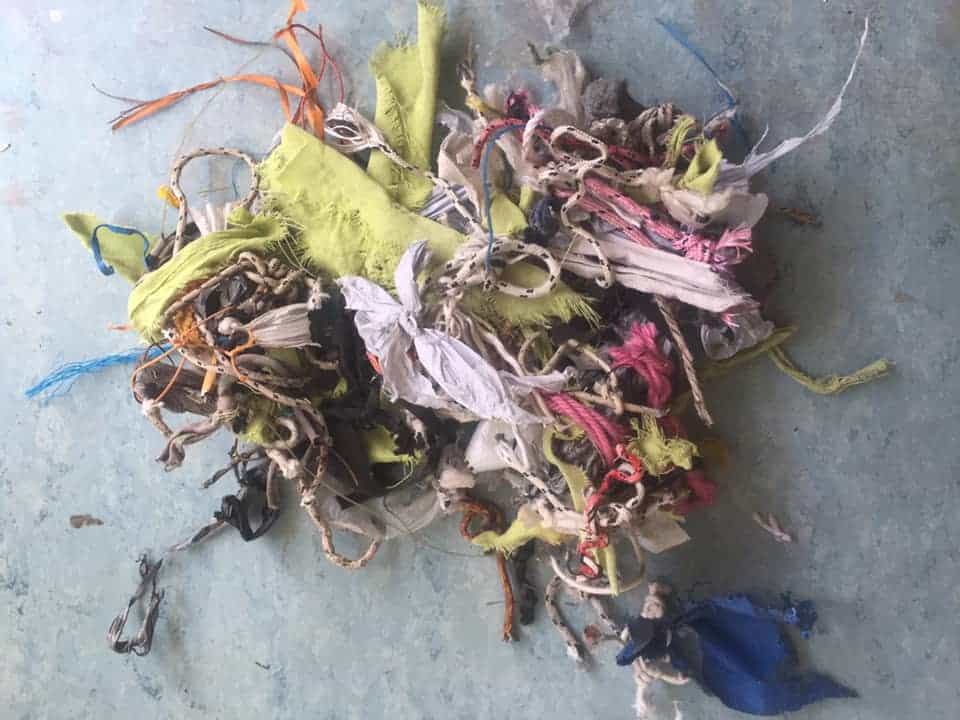 As I removed the strings, I prayed for the people who had hung them up. I wondered where they were now.
- Are you still in Greece?
- Have they made it to one of the countries of their choice: Germany, France or Sweden, which have been mentioned here time and again as favourites.
- Were they deported to Turkey or back to their home countries?
- Are they still alive?
No matter where they are, God knows. And I ask him to be close to the people who have hung up the strings, to bless them and to help them.
The new people and cords
And then there are the people who are now hanging up the strings.
- The woman from Afghanistan whose husband smoked and injected drugs and whom she then either left or who died (we put together different images from the fragments we understood while telling the story).
- The Afghan woman who started a Whats App group for the other women where they download material on dealing with anxiety. I explained Wingwave for stress management and told her how to get the app.
- The woman who tells me: "I am done with Somali men!" (she also explained the story to me, but I didn't understand anything clear from the scraps of words)
- The boy who talks about how a bomb went off next to him in Afghanistan.
- The mother who takes her child to the doctor at night because it has been bitten by a rat (not very deeply, but disinfection was still useful)...
- and and and...
The missing language
Language barrier again and again. In our team, where only half of us speak a language that the others understand. Which I often found difficult. You're surrounded by people - and yet you're not there because you simply don't understand what they're saying. I wonder how it is for the people in the camp, who - apart from members of their own ethnic group - experience this all the time.
We started cleaning the houses and couldn't explain what we were doing. I don't know how I would feel if a cleaning crew suddenly started cleaning my ship's windows at 8.00 in the morning!
Or when we went into the housing containers to collect data and had to ask people to show us their official papers to check whether they lived where they were registered - so that we could contact them when we called them for medical appointments or official appointments. Official papers are simply called "Police Papers" . We knocked on door after door - more precisely on the wall next to which the ceilings that divided the rooms hung.
To make ourselves understood, we said "Police papers", but we couldn't explain why we needed the papers - except to one woman who spoke good English. That hurt me so much. I myself would find it very frightening or intrusive if someone suddenly wanted to see my "police papers" without me knowing what was going on.
I wish I'd had some better language cords to build connections, to take the worry out of the situation.
You can only guess how much fear there is.
- When you see the boys' arms full of scars from scratching
- When women talk about insecurity towards men
- When you hear that a woman cannot sleep in a closed room
- When you hear about nightmares
Sometimes you can smell the fear. Like the day before yesterday, when we cleared out the tent where the new arrivals were staying. Some of the blankets smelled intensely of urine. I wondered whether children had wet themselves out of fear and exhaustion. Or women who didn't dare to go to the toilet alone at night because experience had taught them that it was better not to do so...or whether one or two men had fear in their bodies. I will never know.
When I try to understand all the strings and destinies that intersect here, everything gets tangled up in my head. Many things - such as knowing how many people will not reach the destination of their dreams - make me sad and hopeless. All I can really do is put the small piece of a human life that I have encountered into God's hands... and ask him for blessing and help
The blankets are cleaned and reused. Blankets that are worn out after years of use are cut into strips, which are then reused to attach tarpaulins to tents. For new people with new stories.


