


Moria on Lesbos: Turning the worst into something better
 Day 3
Day 3
Photography of the camp and its inhabitants is prohibited. Therefore, I can only give you a limited visual insight.
No question: it's a disaster.
- Here in Camp Moria on Lesbos, there are around 120 unaccompanied underage boys - without any official, state care, an employee of an aid organisation looks after them. That's it (as far as I can tell). One of the helpers came to us in the women's area, he had cut himself with a razor blade with which a boy had scratched himself. About half of the boys in the camp cut themselves to show courage, to numb pain or simply to feel something at all. I had some iodine ointment and plasters with me and gave him a quick dressing.
- Other aid organisations organise 1 - 2 hours of school lessons per day for the children. The girls proudly showed me what they had learnt (not that I had a chance to read Farsi...but it looked good!).
- The 120 women travelling alone (which sounds like a pleasure trip, but is a harsh reality) also have a carer provided by an aid organisation.
- For everyone else, there is an info point, also manned by helpers, where they can - perhaps - get help.
Only some of the residents live in - completely overcrowded - containers. The others in tents, those who have had it even worse, only under tarpaulins. the nights here are still so cold that I froze with three! blankets I was freezing. I can't imagine what it's like for the people in the camp.
And above all, I am impressed by how people make the best of a really modest situation.
- A man bakes flatbread and walks through the warehouse selling it there and in his self-built stall made of pallets - which is regularly destroyed by the police because it is not allowed to sell things without paying tax on the proceeds.
- Another sells popcorn and flip-flops, then there are three hairdressers...
- People dragged heavy stones from the fields and used strings to make anchors for the tarpaulins.
- Fruit crates serve as "refrigerators", which are hung from the outside on the bars of the container windows and can be accessed from the inside.
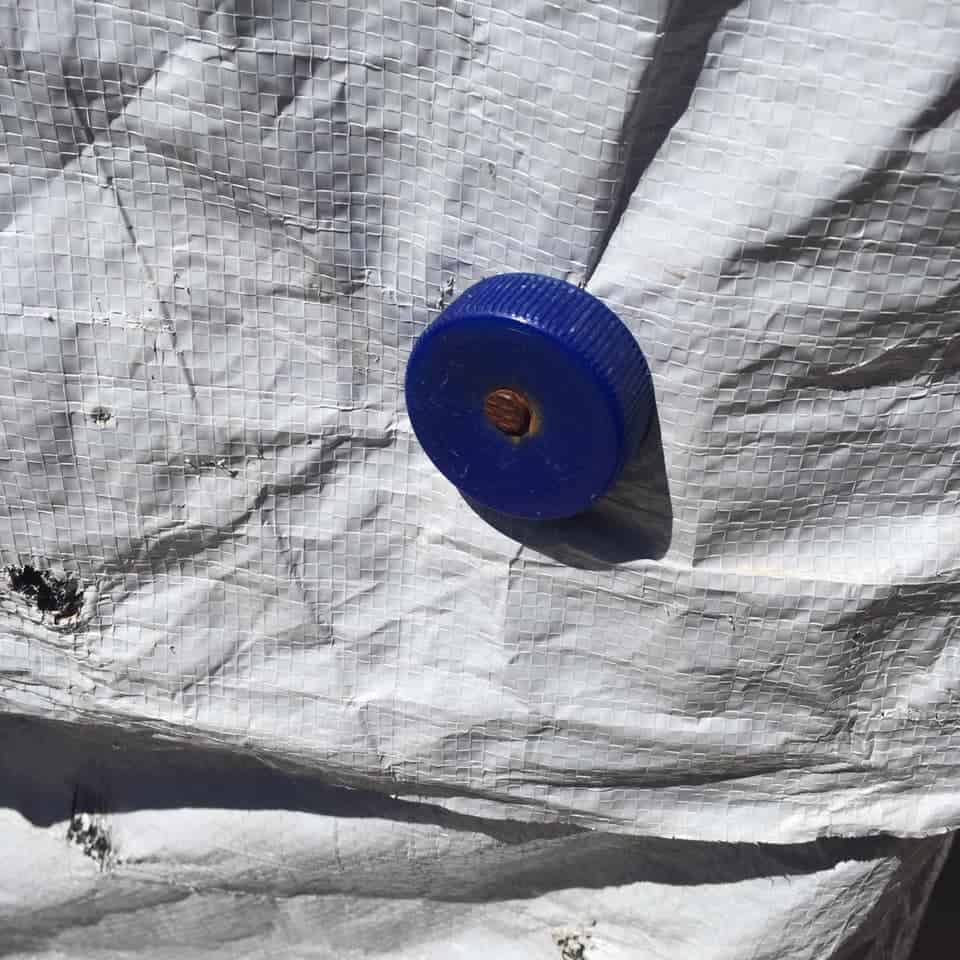
- The only building materials available are pallets and nails - so nails are fastened with plastic bottle caps to prevent the tarpaulin from tearing: "My husband built this!" a Hazara woman proudly explained to me and showed me her home made of palettes, tarpaulins and even a metal door.
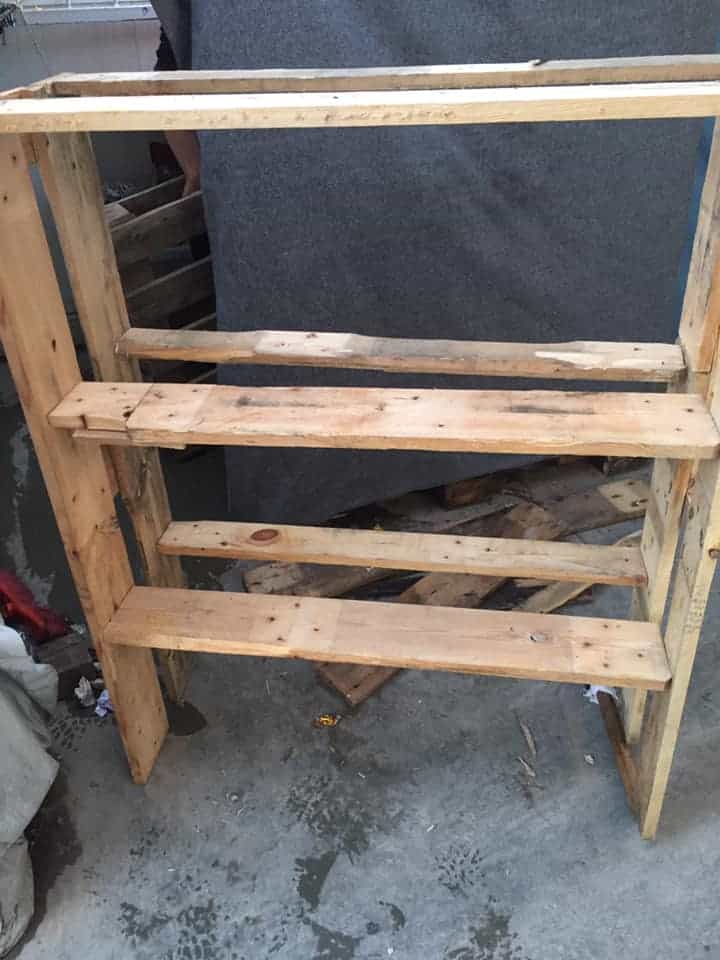
- Pallets are turned into bases for the tents, which prevent the tents from filling up when it rains) and lots of furniture.
- One or more women from Somalia received their papers to continue their journey. To mark the happy occasion, a CD player was organised from somewhere. I was actually assigned to guard the gate, but was briefly relieved by a member of staff so that I could dance along - or simply marvel at the agility of the Somali women's hips. They can do moves that I didn't even realise were possible.
- The helpers organised a projector somewhere, moved all the rubbish bins to one side and then projected the Manchester v Barcelona game onto the wall of a container. "I'm a Barcelona fan", a boy proudly explained to me, who stood out at the beginning of our encounter by trying to break the rules and get through the gate I was guarding into the protected area for the single women. After a while, I asked him to help me. He pushed the latch open and closed, was proud as punch and completed his task with flying colours.
The inventiveness impresses me. Of course, it reaches its limits when materials are lacking. When we arrived yesterday with our cleaning crew, the people were just happy and grateful. There is a kind of canopy in front of the containers, which has collected a lot of dirt and soot after two years. When the men saw us women struggling to clean the canopy, the strongest one climbed up our ladder, a little girl climbed up with him and regularly gave him fresh sponges and a mate held on to the rather wobbly ladder.
Another man in a white crocheted cap, which identified him as a Mecca pilgrim, cleaned doors and steps. Little boys carried a stool behind me so that I could easily cut the remains of old cords from fences. At some point I misplaced my ingenious mini Swiss army knife and couldn't find it again. Then I couldn't carry on with the work because I didn't have the resources - nobody in the whole area had a knife!
Of course there was tea and stories in between. About the one man who had already made it to Germany and learnt German very well in the one year he was there. Then his father died. Despite all the dangers, he went back to Afghanistan because tradition demanded it. He didn't realise that he would lose his right to asylum.
The stories of the women
In the evening, I guarded the gate to the women's protected area from 8 p.m. to midnight. There was room for longer conversations - especially with educated women from Afghanistan
For example, the policewoman from Kabul who took on a dangerous job to provide for her family and went to the evening university at 4.00 pm after work to study law. "Sometimes there was so much traffic that the buses got stuck. Then I ran to make it to university on time. It's not easy here (she lives with 11 other women in half a container), I miss my family, but I'm happy to be safe."
She said she didn't know if she could do it. Of course, the coach in me came out. I pointed out all the things she had already achieved and the difficulties she had overcome. She said at the end "My heart feels better now!"
Or the two sisters who learnt English at night school and one of whom wants to open a hotel later on because she loves cooking and entertaining people. "But maybe a coffee shop as a first step". Her sister wants to continue her engineering studies - which is difficult in the camp because the internet is so bad.
Then there was the Somali woman who told me: "My sister is in Germany. They told her to come to her appointment at 11.00 and she came straight away at 11.00. That's better than here in Greece." I told her that it doesn't work so well everywhere in Germany... and probably doesn't take as long everywhere in Greece as it does in Moria.
She also told me about a rib injury she suffered when a large, strong Somali woman attacked her. I didn't find out whether it was in Somalia or in the camp - due to fragmentary English - or the exact reasons why she said "I am finished with Somali men!"
Tired, I fell into my warm bed. The others had put a plastic tub of hot water under my duvet... a luxury I really appreciated after the cold evening at camp.
I'm on duty again this evening. A boat with 53 refugees arrived today. The others in the team have told us that the internet in the camp is down, which means that the new arrivals can't be registered and get into the camp. They have to wait in the waiting area - a few hours, until tomorrow... nobody knows.


