I decide ... I don't decide

How we can make decisions more easily
Decisions that are not made are ballast for the soul.
Kerstin Hack
I earn my money by making decisions. To be more precise: with the decisions that others find difficult. This is - alongside blockages and traumas that I help to resolve as coach I am probably the most common question that people come to me as a coach with: Do I continue with my café even though it's not profitable? What do I do after the parenting phase? Should I marry my girlfriend even though she's not my absolute dream woman?
Such decisions can be extremely challenging, tiring and lead to couple and family conflicts. This simply has to do with the fact that decisions are fundamentally exhausting. The brain has to think about every decision: What options do I have? What are the criteria? What is the best choice given the criteria? During a decision, the brain runs at full speed. You can think of it like a computer that has to sort through vast amounts of data. If it gets too much - which is the case with around 15 decisions - at some point you just don't want to do it any more, you get decision fatigue.
This is also the reason why filing and Clean up or sometimes just the question of what to wear is stressful for many people. You constantly have to make decisions - and that takes up a lot of energy.
Reduce decisions

Some people make life easier for themselves by reducing the number of decisions they have to make. Steve Jobs always wore the same outfit - a black turtleneck jumper and jeans. He justified this drastic reduction by saying that he had to make countless decisions every day and that it saved him one decision.
Other people are following suit. Capsule wardrobes, which reduce the wardrobe to relatively few, coordinated items of clothing, are in vogue. Usually 30 to 40 pieces. That's far more than Steve Jobs' two pieces or the two dresses my grandma had in her youth: one for everyday wear, one for Sunday. But a whole lot less than the 95 pieces that the average German has hanging in their wardrobe and has to choose between.
Most people have made some basic decisions in their lives that have relieved them of other decisions. They married someone, brush their teeth every evening, perhaps give away part of their income, tend to buy organic and local produce and leave the computer off on Sundays.
Every stable decision saves us from having to make others. This also includes routines.
Life rules and routines
Ancient monks knew that it makes living together easier if certain rules are established and you don't have to decide anew every day what to do. Benedict, for example, wrote a monastic rule that has become a model for many other people. It regulates prayer times, work routines and practical issues - such as how to deal with a task that is too demanding.
You don't have to be a saint or monk to set yourself rules of life. Rules of life can also be a relief in the lives of normal people. Not a corset that restricts you, but rather a kind of grid that you can use for orientation and support. In addition to the calm that good rules bring to life, it is above all the reduction in decision-making that makes life easier.
- Once you have decided to donate 10 % of your income, you don't need to think about it all the time.
- If you schedule certain tasks for certain days of the week, you no longer need to think about deadlines. I don't do a lot of laundry in my household, so I only do it once a week. Always on Mondays. I coach on Tuesdays and Thursdays. I run errands on Wednesdays.
- Anyone who has developed clear basic rules on how to look after their body, soul or relationships needs them "only" implement.
Rules do not have to be fixed forever. They can apply for a while and relieve a lot of the burden of decision-making. And if they no longer seem appropriate, they can be changed.
Tip: Take a look at the Swing concept. The book or the Life training LEOthat builds on this can help you to bring your whole life into balance.
Weigh decision criteria
Despite a number of fundamental decisions, there will still be enough individual decisions to be made: Holiday in Bali or Bochum? Far away forest kindergarten or sunshine daycare centre around the corner? Career, children or both?
Here I see people trying to weigh up a multitude of criteria in their heads: The forest kindergarten is healthier, but the daycare centre is just around the corner. Melanie's friend Mara also goes to the Waldkindergarten, but the pre-school preparation at Kita Sonnenschein is better. When she goes to the Waldkindergarten, one of us always has to take her there, but Kita Sonnenschein is more expensive. We quickly get tangled up in criteria and arguments. It is helpful to first note down all the factors that are important to you - here, for example: Good price, health benefits, existing contacts, good school preparation, proximity to home, distance to daycare centre independent of parents. Now make columns and award points or plus signs. If a factor is particularly important, it is given double or triple points. In the end, you can see more clearly where the plus and minus points of the individual options lie.
Make up your mind!
Many people are afraid of making the wrong decision - and often prefer not to make a decision at all. But: Decisions that are not made are ballast for the soul. Sometimes also for the environment, when you have to put up with all the things for which you haven't yet found the right place. What do I want to keep, what will go? Where should this item go, where should that item go? For example, I'm currently annoyed by the 50 or so files lying around on the desktop of my computer because I haven't yet decided where I want to sort them. They make it difficult for me to keep an overview and make me feel guilty.
Decisions not made paralyse. That's what happened to a woman who had set up a café - which was actually her dream. But the reality was not so dreamlike. The hopes associated with it did not materialise, neither in terms of content nor financially. The whole thing became a burden. When, after a coaching process, she managed to decide to end it all, it was a liberating blow that released unimagined resources. She has long since embarked on new adventures that have allowed her to blossom.
If you don't decide, you get stuck in an intermediate country. He is incapable of acting. Of course, it is important to weigh up decisions carefully and consider all factors. But if no new information is added and you "only" has to make a decision but has no clarity, it is better to make a - possibly - wrong decision than to remain stuck in a state of indecision.
Like a woman who was dissatisfied with her marriage. A coach advised her: "Make a clear decision: I say yes to this man with his faults and weaknesses. Or I will break up with him." She did neither one thing nor the other. She remained in a state of dissatisfaction and indecision. For decades. This did neither her marriage nor her soul any good.
Wasted Time

People who make a decision more quickly are more satisfied with their decision than those who struggle for months. This even applies to buying a washing machine or a car. Those who inform themselves and decide quickly are more satisfied in the end than those who scrutinise all factors down to the last detail and hope for the absolute perfect solution. In the end, even those who take a long time to decide will only end up with a product that is as good as the quick decision-maker. However, they are far less satisfied because they would have expected something better after all the effort.
There are things that you don't and can't know. Making decisions doesn't mean that I know all the facts - especially when it comes to the future. When I decided to convert an old boat into a houseboat and seminar boat, I didn't know whether I could do it. Many people said: That's impossible! But they didn't know any more than I did. I thought: "Impossible is just an opinion!" and decided to take the plunge.
I couldn't decide that the project would be successful - that was beyond my control. But I could decide to weigh up the risks and take a chance.
Wrong decisions can usually still be corrected. If necessary, I could have sold the half-renovated ship again. If necessary, you can start something new. But the time and energy you lose by not making decisions is lost forever.
Involve God
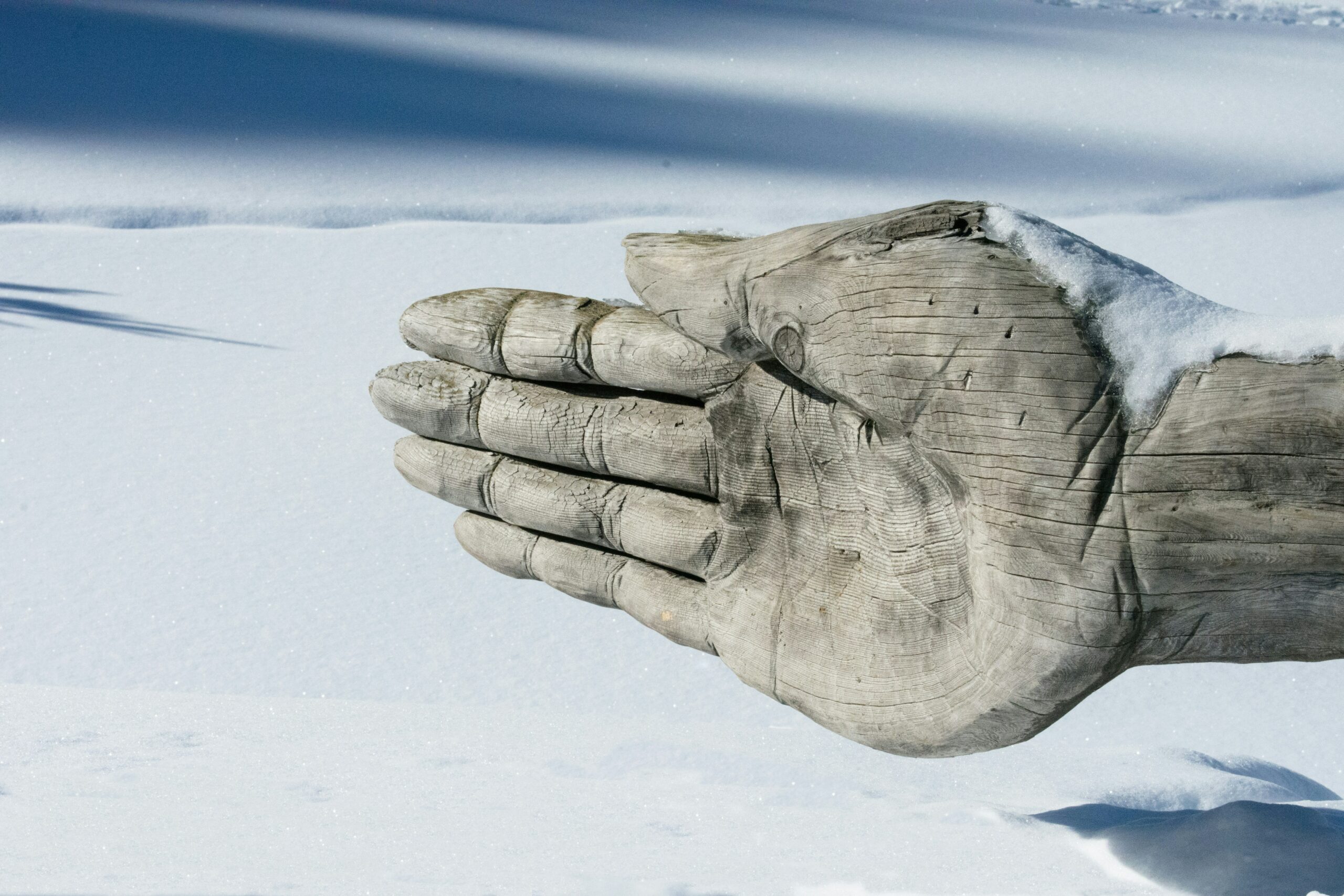
As Christians, we believe that God leads and guides us. However, people have very different ideas about what this looks like in everyday life. While some believe that God only has a say in very important decisions such as marriage, career choice and place of residence, others expect God to speak even in small everyday decisions. Psalm 32:8 has become a guideline for me. Luther puts it like this: "I will instruct you and show you the way you should go. I will guide you with my eyes!"
In the English New International Version it is formulated as a sequence: I will instruct you (I will give you clear guidance) / and teach you (I will teach you) / and guide you (I lead and accompany you) / and lead you with my eyes (and guide you with my eyes).
I can recognise a sequence of maturity in this. In areas where we are young and inexperienced, we need clear guidance. We find it difficult to make our own decisions. We need someone to say: I'll show you. Do it like this! With increasing experience, we need less guidance, but more understanding, support and co-operation at eye level.
At the Willow Congress in Dortmund, Tobias Teichen, senior pastor of the ICF Munich, explained that their employees are promoted according to a similar grading system: I do it, you watch. I do it, you assist me. You do it, I assist you. You do it, I watch.
I do not consider it a sign of spiritual maturity to hope for God's instructions in every decision. Yes, we are children of God. And in some areas of our lives we are indeed inexperienced and need God's clear instruction. In other areas, however, we learn principles from him and his word that we follow when making decisions. Here it can be a sign of our maturity that we make our own decisions and have the certainty that his loving gaze rests on us.
Extra tip for all those who find it difficult to make decisions:
Decide - Impulses for the right choice. Impulse booklet by Marcus Splitt.
This article was first published in the magazine Joyce. With kind permission
I wish you much joy and decisiveness!
Your Kerstin Hack