


Environmentally friendly living - from Spree to Ocean Cleanup
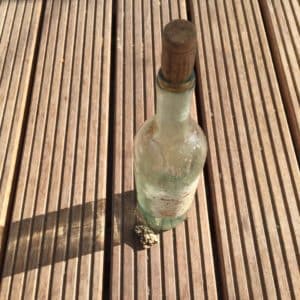 This morning I fished a bottle and a piece of polystyrene out of the Spree during my morning swim. I fished a bottle and a piece of polystyrene out of the Spree and disposed of them properly. I always do that because it's important to me to live in an environmentally friendly way.
I don't want any more plastic to be added to the 250 pieces that are currently floating in the world's oceans per person - as best I can prevent it. I got the figures from Ocean Cleanup.
Bryan Slat's team has developed a passive collection system for plastic parts that will be used in the world's oceans. I am proud to be one of the first supporters who made it possible to develop this environmentally friendly system through crowdfunding.
Environmentally friendly living on a small scale
What fascinates me about Ocean Cleanup is that they have developed a complete system to tackle a huge problem - marine animals dying from plastic and humans eating the plastic in the animals' bodies.
Most of us - myself included - are content with small measures: Fishing bottles out of the Spree, separating rubbish, using deposit bottles, helping to clean up parks or beaches. That's good. But it's not enough to tackle the huge problems.
Thinking big in an environmentally friendly way
 Boyan Slat, who saw more plastic than fish in the ocean when he was 16 years old, decided to develop a real, big solution. And - with the help of hundreds of donors, engineers and volunteers - he has now developed a system that will collect half the plastic from the Great Pacific Garbage Patch over the next five years.
At the weekend Live stream from Ocean Cleanup I watched with fascination as System 001 set off from San Francisco on its journey into the sea. And was simply touched by the fact that a 16-year-old's dream is now beginning to come true (Image: Ocean Cleanup).
Another dreamer is David Katz. He approaches the plastic problem from the land side. He has the Plastic Bank developed. This is a kind of deposit system in which the poorest of the poor in developing countries can buy essentials in special shops in return for the plastic they hand in.
There are more solutions to problems - even if you want to live in an environmentally friendly way
Most people bury their heads in the sand when faced with such major ecological or social problems and think that nothing can be done. And of course, not everyone has the talent of David Katz or Boyan Slat to come up with great solutions.
Some environmentally friendly projects are somewhat smaller. Such as Soki in Kassel that turn old bed linen into new boxer shorts. But they also help to avoid waste, create jobs and bring about change.
If you don't have the capacity to start something big yourself, you can support the people who do by making donations and purchases.
Another idea. Become a little more environmentally friendly every month
 I myself try to do the following every month a to replace a less environmentally friendly product with an environmentally friendly variant, regardless of whether Barbecue lighter or Hair care products.
Changing everything at once is too hard for me too. But googling an environmentally friendly alternative for tights, laundry, washing powder, window cleaner, toothpaste etc. once a month and integrating it into my life - I can do that.
I have compiled some of the best ideas I know for environmentally friendly and socially responsible behaviour in two impulse booklets:
My tip: Get them right now! One for yourself and a few extra to pass on to others...
I would be delighted if we could work together to help preserve and maintain our wonderful world.


