When hope takes root

What if the land you live on is getting drier and drier? When your animals can't find enough to eat and your children barely have a future? That's what happened to Maloy and Loseriani, a couple from the Monduli district in Tanzania.
Their lives were a daily struggle for survival. They lived on what their small farm could provide - which was often not much. The soil was depleted, the rain was increasingly irregular and there were no harvests. The family had a small herd of cattle - the only thing that helped them economically. But the animals also suffered from a lack of feed. Their income was barely enough to pay for school fees or medical care.
Like so many others in their region, they had - without realising it - contributed to deforestation by cutting down trees for firewood. This in turn led to soil erosion and even less rain. A cycle of poverty from which there seemed to be no escape.
The turning point: FMNR changes lives
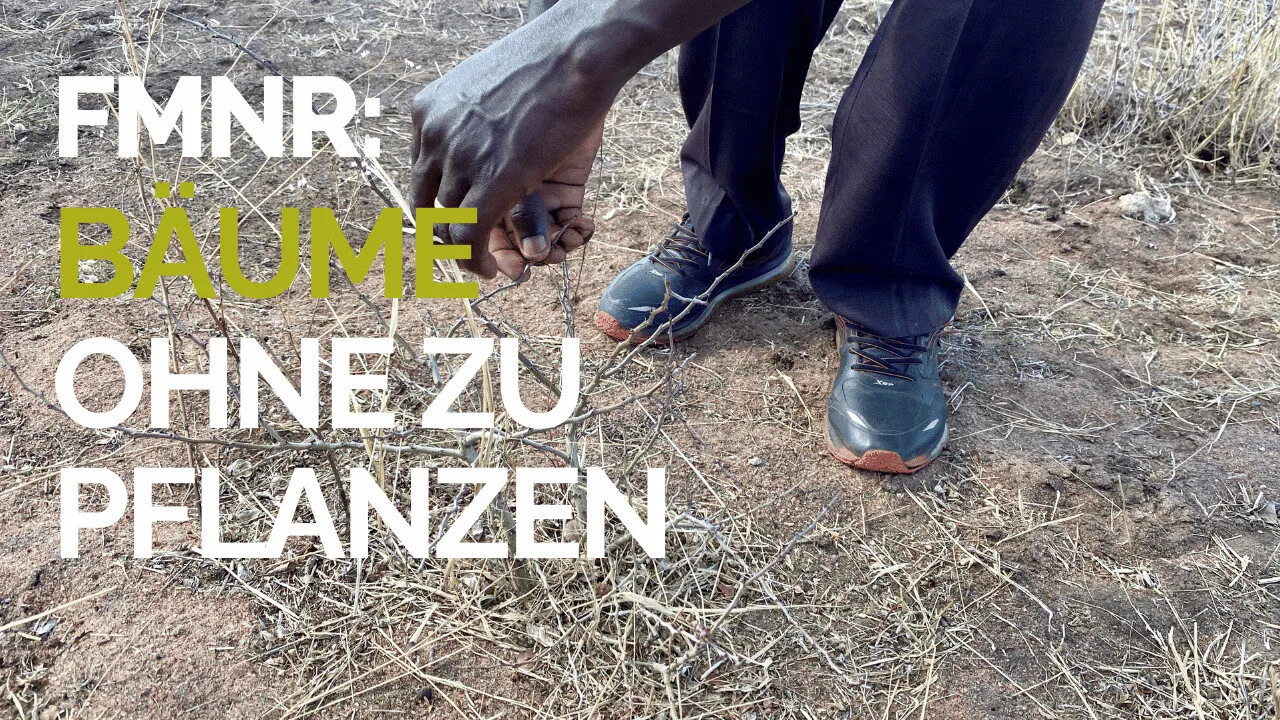
Then came the FMNR project (Farmer Managed Natural Regeneration) from World Vision came into play - a project that my friends and I helped to initiate and finance with a lot of passion. The method is simple: the inhabitants decide together to protect certain areas from further deforestation. Once set aside, new, native, climate-adapted trees sprout on their own from old roots and seeds that are still in the ground. These are pruned professionally. The trees, which draw strength from old roots, can grow up to 5 metres high in two years. This method is 150 times cheaper and much more effective than traditional reforestation with tree nurseries and plantations.
The aim of the project in Monduli is to create new prospects through training in FMNR, environmental protection and economic development. And it works.
Maloy and Loseriani began to learn:
- how to bring existing stumps back to life by pruning,
- how to make soil more fertile,
- how to practise climate-friendly agriculture,
- How to save 70 % of firewood with simple clay stoves,
- how to produce and sell honey with bees,
- and how to organise savings groups with others in order to make progress together.
The fruits of change
The results were not long in coming.
On just four hectares of land, the family's maize yield has risen from 5 to an incredible 26 100kg sacks in the last two years. They also harvested black beans and turtle beans. They began to accumulate savings and invested wisely: in their children's education - two of them now attend an English-speaking school. In a small company where Maloy sells eggs, milk and soap.

The production of soap
Loseriani learnt to farm cattle more strategically. He sold some low-yielding animals to feed the rest and bought higher-yielding cows. Maloy became the leader of a local beekeeping group. The honey they produce is not only a source of income - the bees also make a valuable contribution to biodiversity. They even help to keep elephants away, which would otherwise destroy fields. Destruction of crops by wild animals is a major problem in the region due to the many nature reserves in the neighbourhood.
They now have an energy-saving oven in their kitchen instead of cooking on an open fire as they used to. This is a simple clay oven that reduces smoke and thus protects your health by minimising the risk of injury. But above all, it saves valuable firewood.
In another region of Tanzania that I visited in 2023, people told me that instead of collecting wood for 24 hours, they only need 6 hours because the stoves need so much less wood. This also means that women and children, who usually do this work, have more time for school or other activities - and are less at risk.
All these changes have made the family's life safer, healthier and more hopeful.
Maloy says: "We thank God for the programmes that World Vision has introduced in our area. They are really a blessing for me and my whole village."
From the family to the whole village

Maloy and Loseriani's story is just one of many. The project has already reached over 3,200 people directly, including hundreds of women, children and young people. More than 20,000 people in the villages benefit indirectly from the improvement of the environment and climate.
The most important successes of recent months:
- 13 hectares of additional FMNR land have been renaturalised - a total of 360 hectares in all project villages.
- Honey production has more than tripled - to almost 2 tonnes in just six months.
- Over 1,300 households are now growing climate-resistant seeds.
- 62 families use improved stoves and consume significantly less wood.
- 40 savings groups were supported with microloans.
- Environmental clubs have been set up in ten schools, where over 500 children are learning how to protect and restore their environment.
More than development aid - a movement from within

The impressive thing: The change comes from within. The local people shape it themselves. They learn what they can do, try things out, make mistakes, continue to learn - and share their knowledge with others.
The "Empowered World View" approach not only imparts expertise, but also strengthens people's self-image. Many start to believe: I can make a difference - in my life and in my environment.
Hope that draws circles
When I read the reports, I don't just see numbers. I see people like Maloy and Loseriani in front of me - courageous, willing to learn, full of drive. They stand for many others whose lives have been set in motion by this project.
Not "only" trees grow here. Economic stability, better health, more income, self-efficacy and hope also grow here.
The FMNR method, combined with complementary measures, is one of the most effective ways I know of to help people and protect the climate.
The big goal of World Vision is to achieve by the year 2030 one billion (no typo!!!!!) hectares of degraded land could be reforested using the FMNR method. This could bind around 25 % of global CO₂.
My „small“ project, currently covering 360 hectares, is a small part of this. But I am proud that I can be an effective part of the big dream of saving our climate and improving the lives of thousands of people at the same time.
My friends and I fully financed the project in Tanzania.
We are now starting to support a major project in Uganda - 2 million hectares are to be reforested with FMNR.
Here you can participate - you will also receive a donation receipt.
Thank you from the bottom of my heart if you support this or similar projects - through donations, prayer or sharing the stories.
Together, we can make it possible for the now desolate landscape to become a habitat for people and animals again.
More on this at YouTube: