Working from home: a good routine
I've been working from home for 20 years, 1 month and 4 days. I love it!
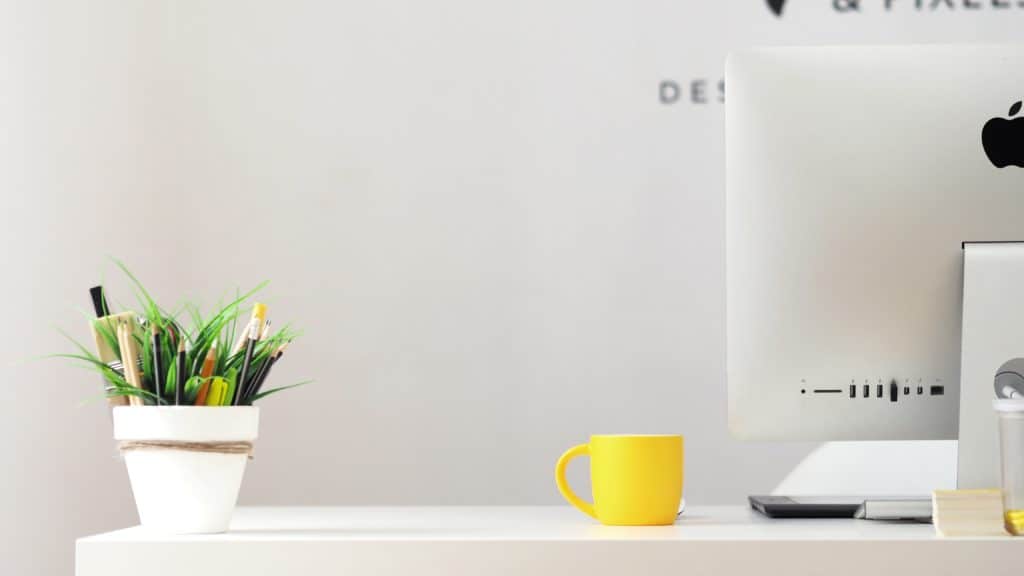
Over time, I have discovered that a fixed structure helps me not to become frazzled. I'm a very creative person and am full of ideas that I like to distract myself with. Without a fixed framework, chaos would quickly break out for me.
A good framework helps me to stay on course. I often say: "The frame can be boring, the main thing is that the picture is colourful!"
My home office structure
My home office structure has six pillars:
- Morning routine
- Creative block with breaks
- Lunch break SELA
- Afternoon block
- Switch
- Evening programme
I'd be happy to tell you what that looks like for me. You are welcome to learn something from me and adopt it for yourself.
Morning routine in the home office
Get up
I wake up by myself between 6.00 and 7.00. I allow myself the luxury of not setting an alarm clock most of the time. If you find this more difficult, I would definitely recommend having a set time to get up.
Greet the day
I put my feet on the floor, feel that I am being carried and say out loud: "I start this day with the dignity of a queen, the lightness of a feather and the joy of a child!"
Movement
Movement must and may be. In summer I go for a swim, in winter I go for a short jog or out on the trampoline or, if the weather is really bad, I go for a 7 minute workout inside.
It's important that I don't wrap up too warm, because coolness strengthens the cardiovascular system. You need this to fight off illnesses and infections.
Changing shower
Also for the heart and circulation. Brush massage on the skin and then an alternating shower: 20 seconds cold, 10 seconds warm. Repeat 4 - 8 times. I soap up or rub myself down during the cold phases and simply enjoy the warm ones.
Then I take some essential oils and supplements such as vitamin C and zinc to boost my immune system
Reflection time
I also have a large cup of lupinine latte (I've kicked the caffeine habit). I love the feeling of holding a warm drink in my hand.
This accompanies a time of Reflection. In summer, on the roof of my boat, where I have drawn a path that first leads inwards and then outwards again.
- Connectedness: I remind myself that I am connected to God and people
- Gratitude: I find at least three new things for which I am grateful.
- Forgiveness: I forgive myself or others for hurtful behaviour or failure.
- Great vision: I remember what I am in the world for.
- Vision on a small scale: I briefly go through the day ahead in my mind.
- Blessing: I ask for blessings and good luck for the day for myself and others.
Before or after the reflection time, I read the Bible or an inspiring book.
Two creative blocks with a break
I try not to read any emails or messages at the start of the working day as they would only distract me and take away my concentration.
Instead, I start with the most important tasks of the day. My brain is still fresh in the morning and I use this to get the most important things done.
I have already defined the tasks the day before, usually want to complete them in the morning and just have to get started.
For me, this is usually writing texts. I do this on my treadmill, on which I have mounted a laptop holder. I don't want to sit so much and the combination of walking slowly - around 3 kilometres per hour - and writing works well for me. Walking is automatic and doesn't distract me. And a large part of the 5 km that I want to walk every day at least has already been completed.
For me, writing on the treadmill works even better than writing sitting down.
When I'm sitting down and don't know what to do next, I often "quickly" jump away to the internet - and then immediately lose my train of thought. If I'm stuck on the treadmill, I look outside, take a few steps and my brain is back on track in no time.
Break in the home office
I take a break after about 90 minutes. Either when a text is finished or when I'm tired from running and realise that my concentration is waning.
I practise Intermittent fasting - also to give the body enough time to remove waste products and thus strengthen the immune system. During the break, I make myself a muesli or, even better, a green smoothie with lots of ginger. I usually pick up my post during this time and sift through it quickly.
After 15 - 20 minutes it continues.
The second writing block also takes about 90 minutes. It's a very good feeling for me that I've usually already completed the two or three most important tasks of the day in the morning and can tick them off or mark them green in my calendar as a symbol that I've achieved something. .
Before my lunch break, I do a round of small jobs: answering emails, wishing people a happy birthday, posting something on social media, etc.
Lunch break SELA in the home office
I love learning new things. After a long day of working from home, I often lacked the energy or had other appointments. So I integrated learning into my lunch break.
SELA means pause in Hebrew and for me it stands for
S - Siesta. Do nothing, look at the water, close your eyes.
E - Food. Cooking - mostly simple things like soups, stews or vegetables or reheating something I've pre-cooked.
L - Learning. My highlight of the day. Learning something new. Sometimes just a quick business made simple (5 minutes), but usually a lesson from an online course. Sometimes I hang up laundry on the side or do household chores that don't cost me much energy.
I myself also offer Webinars which can be used for lunch breaks. For the 12 series webinars there are even special discounts.
A - Activate Get the body going again. A few minutes of sport or gardening.
Sometimes I also change the order to ELSA - depending on the energy.
Afternoon block in the home office
Some days I coach in the afternoon, so the rhythm is set. On other days, I work from home on projects that have to be done. Usually not on the treadmill, as 2 x 90 minutes is enough for me, but sitting down.
Break
There is also a short break here. I often treat myself to a little energy boost: chocolate, orange juice or energy balls.
In the second afternoon block, it's often just small jobs and routine tasks, e-mails, answering enquiries, bookkeeping, etc. I often lack the mental energy for more challenging tasks. I often don't have the mental energy for more challenging tasks.
Sometimes, when I "only" have to read materials, I go to a café - I can often concentrate better on texts there than at home and I love the variety and the atmosphere.
Switch over: Lock home office
I really enjoy working and it's often not easy for me to stop. To my Switching ritual OFF includes three things
- A - Plan tasks: Plan the tasks for the next day. You still know what's important in the afternoon. And your head can't think strategically in the morning. That's why planning in the afternoon is much easier than in the morning. Planning in the afternoon
- U - Remove clutter. In theory, you always clear everything away straight away. In practice, that doesn't always work. That's why we do another round of tidying up so that we can start the next day with clarity.
- S - Create a safe distance It's not easy for me to stop working. That's why the laptop really does get packed away - it goes into my mini office (1.50 x 1.80 metres).
I remove myself, physically go away. Sometimes to the garden, sometimes to the letterbox, sometimes to take out the rubbish or I do the housework to signal to my body: Office work can be over now.
Evening programme after the home office
Besides dinner, this can be anything: events, meetings with friends live or virtually, reading...
I end the day with a few lines of notes in my 5-year diary, a round of gratitude, prayer and a short visionary outlook for the next day: What's next? How do I want to do it well?
Sometimes I also give my brain a mental task that it can solve overnight. The brain thinks all night anyway.
I want it to think about things that will help me move forward, e.g. How can I improve the seminar? What can I do to get more people to discover what I offer? What can I write in the next inspirational email to empower people?
The brain likes to think at night - and yes, the idea for this blog post also came to me at night. In the morning it was there to greet me... and then I got on the treadmill and wrote. It's currently 9.36 and I've already run 4.4 kilometres. That feels good.
Further tips for good work can be found in the Quadro training booklet Work organisationthat psychologist and coach Christoph Schalk wrote with me.
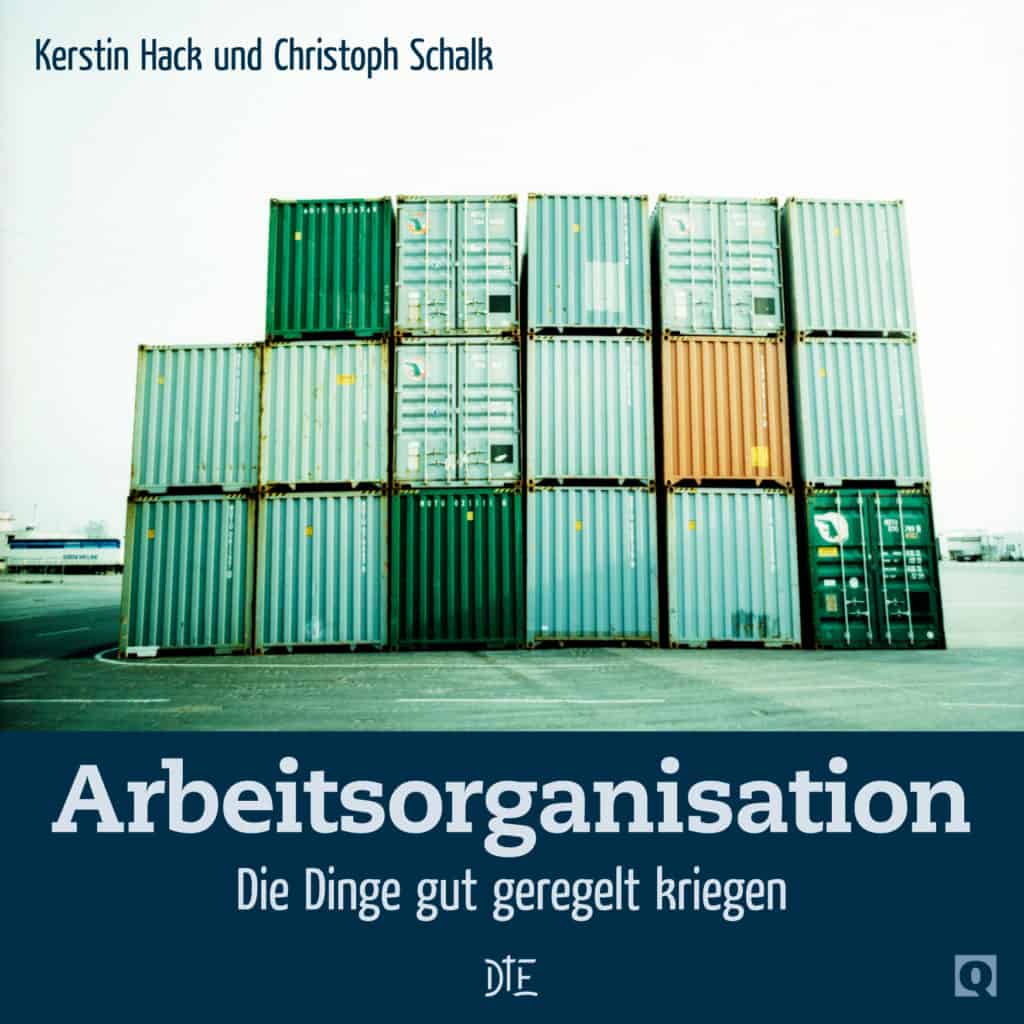
We also have the course SAM. Mastering his work developed - ideal for anyone who wants to learn to work effectively, whether in the home office or in the office.
This is my daily routine in the home office. I hope it has given you some ideas on how to organise your days in the home office.
- How do you do that in the home office?
- What gives your days at home direction and stability?
- What tips and tricks do you have in store
Please write me a comment! I'm looking forward to it!
Part 2: Home office. Design rooms well.
Pictures: By me or Photo by Photo by Samantha Gades + Georgie Cobbs on Unsplash